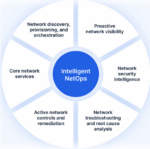
When outages hit, everyone blames the app, the cloud, or the firewall because that’s what users can see. Often, the real culprit is the network, specifically core network services such as DNS. Every service is reliant on DNS and a well-defined IP address space. When core services aren’t resilient and centrally managed, organizations struggle to automate network changes, simplify multicloud operations, and reduce risk.
When the Basics Become the Bottleneck
Core network services such as DNS, DHCP, and IP address management, together known as DDI, remain fragmented and manual in many enterprises. It’s managed using spreadsheets or siloed tools. These setups introduce errors, create visibility gaps, and don’t scale. While organizations invest billions in AI, analytics, and automation, many neglect the backbone of their infrastructure. The financial impact of that neglect is staggering.
Research from Enterprise Management Associates (EMA) showed that downtime can cost close to $13,000 per minute, depending on company size. Recent global outages at AWS, Azure, and Cloudflare crippled large swathes of the internet, preventing shoppers from shopping and employees from working. These high-profile incidents are rare, but they highlight a real concern for enterprises. And at the enterprise level, many service interruptions are preventable. EMA found that human error—manual processes or a lack of visibility—is the culprit for 60% of outages.
Organizations have embraced cloud-native architectures, microservices, and AI-driven automation. And the speed of change exceeds human capacity to manage it manually. The result is a hidden drag for innovation. IT operations teams fire-fight instead of building, deployments are slow, and confidence wanes.
Why Legacy Approaches No Longer Work
Traditional network management practices were built for a different era, when applications were monolithic, updates were infrequent, and network perimeters were well-defined.
Today’s world moves fast. Enterprises deploy hundreds of updates daily and face threats that exploit minute misconfigurations. Manual tools and disjointed systems can’t scale or secure this complexity. They create blind spots, delay deployments, and expand the attack surface—turning transformation from a growth driver to a source of risk.
In this reality, agility and resilience are inseparable. Adopting a unified DDI solution helps enterprises get the most from cloud adoption. It modernizes and secures an enterprise’s network infrastructure. It’s an essential evolution as organizations—and their customers—expect real-time operations and always-on digital services,
The Case for Unified, Automated DDI
Modernization starts with unifying DNS, DHCP, and IP address management into a single, automated platform. This foundation delivers visibility, control, and speed across the entire network, unlocking three core benefits that directly support transformation goals:
- Visibility and control – A unified DDI system provides a real-time, synchronized view of the network, eliminating blind spots and conflicting records. Every change is tracked, logged, and auditable, giving teams confidence and reducing operational friction. One global healthcare provider shrunk DNS management time by over 90% after moving to a unified platform, accelerating new service rollouts.
- Resilience and security – DNS and DHCP are high-value targets for attackers. Centralized automation reduces this risk by enforcing consistent policies, detecting anomalies faster, and simplifying compliance. This strengthens resilience and speeds recovery when incidents occur.
- Efficiency and innovation – Automated workflows replace hours of manual updates and troubleshooting. Engineers are free to focus on innovation, including everything from cloud migrations to AI adoption. Routine changes that once took days can now be completed in minutes, aligning IT velocity with business expectations.
Together, these benefits shift DDI from a maintenance task to a growth catalyst. Unified DDI gives leaders control: clear sightlines, shockproof infrastructure, and the room to innovate without fear of failure.
The Financial Equation
The financial case is compelling. Consolidating and automating DDI reduces outage costs. It eliminates redundant tools and recovers engineering hours, yielding annual savings in the millions. Some organizations recoup their investment within months, while other studies show large enterprises achieve first-year benefits exceeding $1 million.
However, the real ROI goes beyond cost savings. Unified DDI removes the unseen obstacle to innovation. Unified DDI gives leaders the confidence to move faster and change more. It’s a foundational investment that multiplies returns from other initiatives.
Leadership Through Foundation
Those leaders who modernize their DDI now gain the upper hand. Centralized management, automation, and enhanced visibility, security, and resiliency for your core network services await. Unified DDI is the foundation for enterprises to achieve their goals today and tomorrow.