AI adoption is accelerating across industries, but most organizations are failing to realize its full potential. According to Lucid’s AI Readiness Report, only 26% of organizations that have implemented AI agents rate them as completely successful.
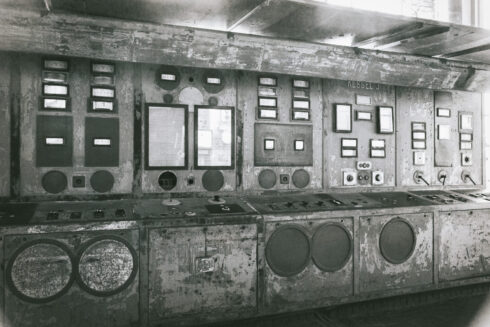
The difference between companies with successful AI implementation and those that struggle lies in the foundation upon which it’s built. For businesses to remain competitive, they must engage in legacy IT system modernization — the process of updating, replacing, or re-engineering outdated software applications, hardware infrastructures, or processes to align with current business needs and tech advancements. Too many organizations are layering sophisticated AI onto legacy IT systems that weren’t built for it.
A shocking 61% of knowledge workers believe their organization’s AI strategy is only somewhat or entirely not at all aligned with operational capabilities, further proof that AI transformation requires legacy system modernization as a prerequisite.
Understand Your Current Systems Before Adding AI
The success of AI depends on an interconnected ecosystem that can share both inputs and outputs. 46% of employees say they “sometimes” rely on tribal or institutional knowledge, with 31% saying “often” or “always.” Capturing tacit knowledge in a format that AI can use is essential. Legacy IT systems that lack integration act like isolated islands, cutting off the flow of data and knowledge needed for AI to succeed.
Executives should always balance their risk appetite: pursuing market innovation while maintaining system stability. The decision of when to modernize legacy systems requires assessment across three dimensions.
- System needs: Is your current system secure, stable, and compliant with regulatory standards?
- Associated pain points: Does it integrate well with other tools, or does it force manual workarounds?
- Cost to change: Consider both direct expenses and the hidden costs of downtime during transition.
Create AI-ready workflows
Nearly half of organizations (46%) have integrated AI into only “some” or “almost no” workflows, showing that many teams aren’t yet ready to embed AI seamlessly into day-to-day operations. Establishing this baseline visibility reduces risk and builds confidence in AI-driven outcomes and allows teams to identify quick wins that deliver immediate productivity improvements. These early successes generate momentum and secure buy-in for larger initiatives while ensuring that AI supports strategic business goals rather than dictating them.
The top reasons AI implementations fail reveal what’s at stake: cultural resistance (27%), lack of clearly defined parameters (26%), and lack of transparency around processes and best practices (25%). Avoiding these pitfalls requires clear metrics tied to tangible outcomes: operational efficiency gains, reduced system downtime, smoother system integration, and measurable cost savings.
Leverage data and tools to guide system modernization
AI is only as effective as the clarity we have into system operations. Many organizations struggle because teams operate with conflicting assumptions about processes and system dependencies. This leaves modernization efforts scattered and inefficient.
A key step in overcoming inefficiencies is documenting workflows end-to-end. Surprisingly, only 16% of knowledge workers feel their workflows are well-documented. Equally important is aligning stakeholders to uncover hidden dependencies and prioritize pain points. This alignment matters, as 49% of organizations report undocumented or ad-hoc processes impact efficiency, with 22% saying this happens “often” or “always”.
Tools that make systems visible and understandable can bridge these gaps. Process documentation (34%) and visual workflows (33%) are top priorities for knowledge workers adopting AI. Mapping data flows, system dependencies, and effort versus impact creates a shared language that technical and non-technical stakeholders can use to collaborate effectively. This helps teams focus resources on initiatives that will deliver the highest return.
Turn operational readiness into your AI advantage
AI cannot compensate for outdated systems. It cannot bridge gaps it cannot see, automate processes that aren’t documented, or deliver value when layered onto infrastructure that lacks integration and alignment. Operational readiness is the new competitive edge. By modernizing legacy systems, building visibility into existing workflows, and aligning stakeholders, organizations are building the infrastructure for tomorrow’s AI breakthroughs. AI works best when systems are modern, integrated and aligned.The organizations that have invested in a clear, documented, and modern foundation will be the ones to scale with speed, security and intention, turning the promise of AI into a permanent engine for growth.