Topic: observability
Will Kubernetes Become the Standard for AI Workloads?
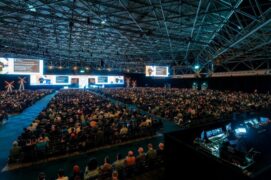
The answer, of course, is that it depends. But the Cloud Native Computing Foundation (CNCF) announced some major steps forward toward this goal at the KubeCom Europe conference last week in Amsterdam. This was the biggest KubeCon ever with about 13,500 attendees, representing an 8% growth over last year, reflecting CNCF’s extraordinary success in establishing … continue reading

groundcover Brings AI-Native Observability to Production Analysis
SAN FRANCISCO — groundcover, the observability platform for modern architectures, today announced the general availability of groundcover AI Mode, a native AI capability designed to help engineering teams investigate production incidents and analyze infrastructure behavior directly inside their own cloud environments. AI Mode runs natively within the customer’s own AWS infrastructure via Amazon Bedrock, ensuring … continue reading

Lightrun Launches AI SRE With Live Dynamic Runtime Context
The reliability of software has grown as an issue with the massive adoption of AI agents and code assistants, moving developers from coding to issue remediation and the development bottleneck to runtime. Lightrun, a leader in software reliability, today announced a real-time AI SRE built on live runtime context, allowing AI agents and engineering teams … continue reading

Userful’s Infinity Platform Achieves Breakthroughs in Security, Operational Awareness, and Response
Userful, creators of a software-defined platform for enterprise-wide operational awareness and response, today announced unification of observability, security, visualization, and critical event management into a single operational command layer, bringing together more than $60 billion in addressable market under one software-defined umbrella. Built on its Infinity Platform’s quad-play workflow are critical integrations and features enabled … continue reading

IT Operations and Management predictions for 2026
Advancements in artificial intelligence in 2025 marked a seismic shift in how organizations can use the tools to automate IT processes, predict network interruptions and identify and remediate issues that could lead to poor performance, or worse, cybersecurity breaches. This article includes the thoughts of industry leaders as to what we might expect moving into … continue reading
Palo Alto Networks to Acquire Chronosphere, Next-Gen Observability Leader, for the AI Era
Cybersecurity provider Palo Alto Networks today announced it has entered into a definitive agreement to acquire observability platform provider Chronosphere for $3.35 billion in cash and equity, subject to changes in the deal’s value. The deal enhances Palo Alto Networks’ ability to help organizations build a unified data and security fouhdation required for today’s applications … continue reading
Why Network Observability Must Start Outside the Data Center
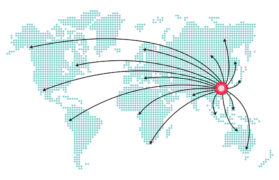
Most organizations with network operations today believe they have a good handle on network observability—they’ve progressed past legacy tools and have excellent data collection within the four walls of their data center. They are masters of packets, latency, faults, and performance logs for their internal, managed infrastructure. Yet, when you ask them to assess their … continue reading
Groundcover launches observability solution for LLMs and agents
The eBPF-based observability provider groundcover today announced an observability solution specifically for monitoring LLMs and agents. It captures every interaction with LLM providers like OpenAI and Anthropic, including prompts, completions, latency, token usage, errors, and reasoning paths. According to groundcover, while LLMs can offer many benefits, they also introduce a lot of negatives: performance volatility, … continue reading
Grafana launches preview of AI assistant that works across all of Grafana Cloud
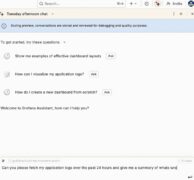
Grafana Labs announced a public preview of Grafana Assistant, an AI assistant that IT teams can use to interact with logs, metrics, and traces in a conversational manner. It is available in all parts of Grafana Cloud, and sees the context of what is on the page so that it can give specific, context-aware answers. … continue reading

The rapidly changing landscape of observability and AI
Imagine two high-energy particles colliding at such great pressure and velocity that they bring about nuclear fusion, producing a combined new element, along with a shower of radiation that affects everything around them. This is an analogy to describe the collision of two major trends in information technology—Observability (shortened as “O11y”) and Artificial Intelligence (AI). … continue reading

Report: Open source solutions continue to dominate observability strategies
Open source solutions are continuing to dominate the observability space, with 75% of respondents to Grafana Labs’ latest Observability Survey saying they use an open source solution in their observability efforts. Thirty percent of respondents say they only use open source, and 36% use mostly open source. On the other end of the spectrum, 8% … continue reading
LogicMonitor enhances observability platform to better monitor AI workloads and applications
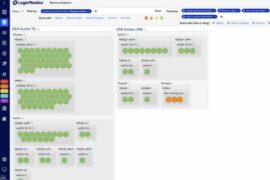
LogicMonitor has announced new capabilities to provide IT teams with greater visibility into their organization’s AI workloads and applications. LogicMonitor Envision is the company’s observability platform for all applications in the IT stack, and the latest updates to it include: Expanded support for monitoring Amazon Q Business and Nvidia GPUs Support for EKS and AKS … continue reading