Topic: cncf

Will Kubernetes Become the Standard for AI Workloads?
The answer, of course, is that it depends. But the Cloud Native Computing Foundation (CNCF) announced some major steps forward toward this goal at the KubeCom Europe conference last week in Amsterdam. This was the biggest KubeCon ever with about 13,500 attendees, representing an 8% growth over last year, reflecting CNCF’s extraordinary success in establishing … continue reading
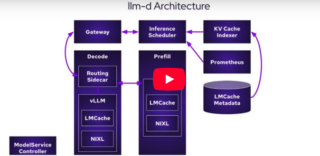
Standardizing AI at Scale: llm-d Joins the CNCF
In a significant move toward solidifying the infrastructure for production-grade AI, the llm-d project is being contributed to the Cloud Native Computing Foundation (CNCF) as a Sandbox initiative. This commitment, spearheaded by a multi-vendor coalition including CoreWeave, IBM Red Hat, Google, and NVIDIA, aims to establish an open standard for distributed inference. By integrating llm-d into the cloud … continue reading

KubeCon 2025: CNCF to Standardize AI Workloads
Ten years after standardizing Kubernetes, the Cloud Native Computing Foundation (CNCF) announced at KubeCon 2025 NA in Atlanta that they are working to standardize AI workloads on Kubernetes, with the goal of achieving broad industry adoption of the standard. Announced on November 11 the Certified Kubernetes AI Conformance Program creates open, community-defined standards for running … continue reading
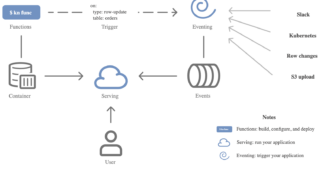
Cloud Native Computing Foundation Announces Knative’s Graduation
The Cloud Native Computing Foundation (CNCF), which builds sustainable ecosystems for cloud native software, announced the graduation of Knative, a serverless, event-driven application layer on top of Kubernetes. Knative simplifies how developers build, deploy, and run modern workloads by abstracting the infrastructure concerns such as autoscaling, routing, event delivery, and building containers. It allows teams to focus on architecture … continue reading

Solo.io announces kagent enterprise
Context. It’s become a critical piece that organizations need to get the most of out agentic AI efforts. When looking at cloud native application delivery, Kubernetes is the gold standard, but according to AI platform provider Solo.io, it doesn’t have the contextual awareness necessary for all that’s needed to run AI applications securely and at … continue reading

CNCF announces graduation of in-toto security framework for software supply chain integrity
The Cloud Native Computing Foundation (CNCF) today announced the graduation of in-toto, a software supply chain security framework developed at the NYU Tandon School of Engineering. According to Linux Foundation Research’s 2024 report “Strengthening License Compliance and Software Security with SBOM Adoption,” software bills of materials (SBOMs) help organizations identify vulnerabilities early and improve traceability. The … continue reading
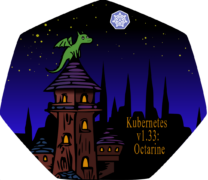
CNCF releases ‘magical’ Kubernetes version 1.33
An update to Kubernetes – version 1.33 – that features 64 enhancements is being released today by the Cloud Native Computing Foundation. According to the CNCF, the theme for Kubernetes v1.33 is “Octarine: The Color of Magic,” inspired by Terry Pratchett’s Discworld comic fantasy book series. This release highlights the open-source magic that Kubernetes enables … continue reading

CNCF announces graduation of CubeFS
The Cloud Native Computing Foundation (CNCF) has announced that CubeFS is now a graduated project. CubeFS is a distributed storage system supporting access protocols like POSIX, HDFS, and S3. According to the CNCF, key use cases supported by CubeFS include big data, AI/LLMs, container platforms, separation of storage and computing for databases and middleware, and … continue reading

CNCF announces new certifications, training initiative in Africa
The Cloud Native Computing Foundation (CNCF) today announced a number of new ways for cloud native developers to build their skill sets. It is announcing the first two in a series of certifications related to platform engineering, the Certified Cloud Native Platform Associate and the Certified Cloud Native Platform Engineer. The former is a multiple … continue reading

Cloud Native Computing Foundation announces KubeEdge graduation
The Cloud Native Computing Foundation today announced that KubeEdge, an open-source edge computing project built on Kubernetes, has achieved graduation status. KubeEdge, according to the CNCF, expands the cloud native ecosystem to scenarios and industries outside of data centers by bringing the container orchestration and scheduling capabilities of Kubernetes to the edge. Further, it delivers edge … continue reading

Dapr – ITOps Times Open Source Project of the Week
Dapr is a collection of APIs for building microservices that takes care of security, resiliency, and observability so that developers can focus on other aspects of building their applications. Dapr provides building blocks that are based on best practices for building microservices, and those building blocks can then be incorporated into the application using whatever … continue reading

Kubernetes v1.31 released; 11 new features now in GA
Some 11 features have graduated to stable in today’s release of Kubernetes v1.31, the first since the project celebrated its 10th anniversary this year. The release’s theme, here in the dog days of summer, is Elli, a playful pup meant to reflect the spirit and joy of the community of contributors. Among the highlights of … continue reading